The indispensable, and biased, source
Date
80CE
c. 80 CEapproximate date
In Rome, under the protection of the Flavian emperors, Josephus wrote the only extended narrative of the period: a source partly corroborated by archaeology, but also a piece of propaganda and self-defense.
Sourced narrative
Each block is a verifiable statement. The number opens the cited page; amber or coral blocks flag tradition or contested interpretation.
10 statements
01From general to historian
For early Roman rule, no source weighs as much as Flavius Josephus. Born in 37 CE, of priestly and Hasmonean lineage, he commanded Jewish troops in the revolt of 66 CE and later went over to the Roman side. During the siege of Jerusalem, Josephus worked for the Romans as interpreter and go-between. After 70 CE he settled in Rome and wrote the history of the revolt, the Jewish Antiquities (from biblical origins to shortly before the war), Against Apion and an autobiography. His latest texts seem to date from the 90s, hence the assumption that he died around 100 CE.
02An ancient historian
Josephus is not alone: there are Philo of Alexandria, the Dead Sea Scrolls, the pseudepigrapha, mentions in Greek and Latin authors and the New Testament, as well as ruins such as those of the Temple, Caesarea and Masada, inscriptions and coins. Still, he alone narrates in detail the first 150 or so years of Roman rule, and without him this material would be hard to piece together.
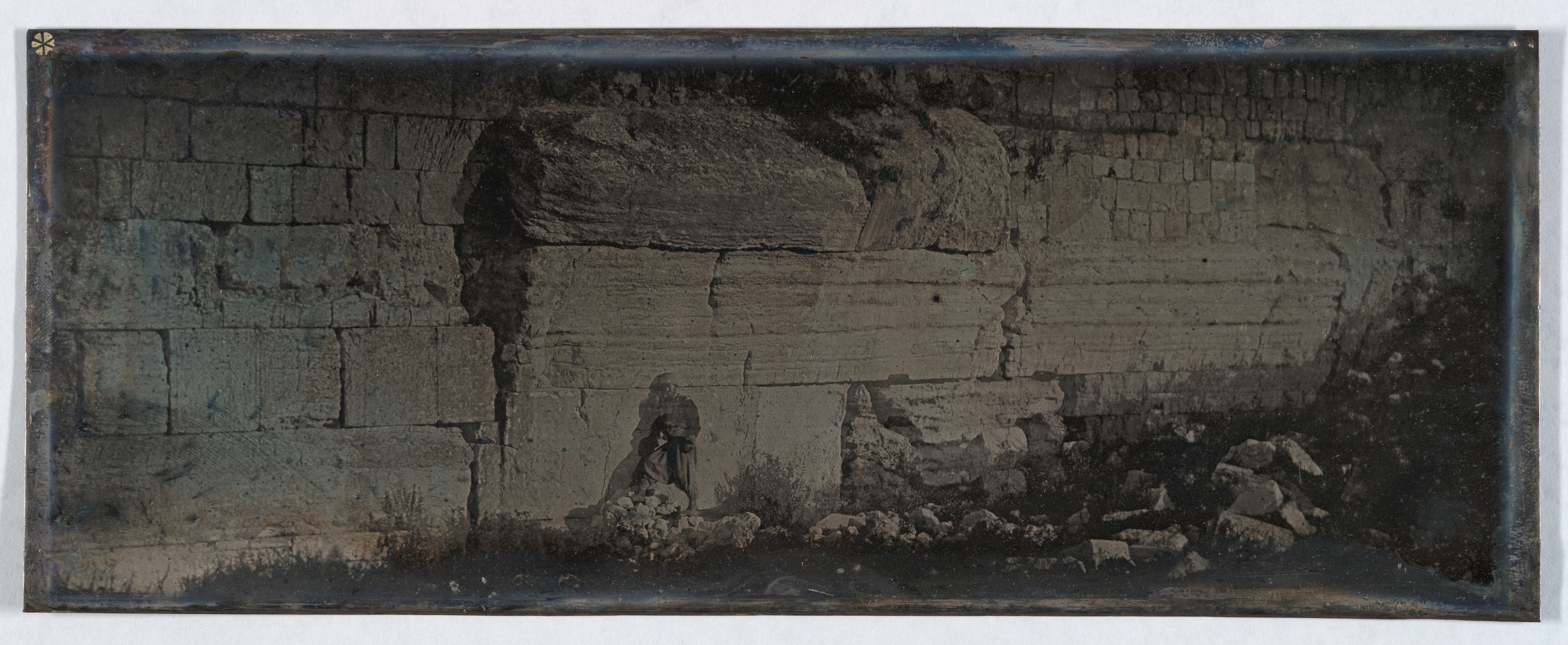
In part, Josephus has been confirmed by other evidence. What he reports about the Essenes matches the Dead Sea Scrolls sect on several points; digs at the southwest angle of the Temple Mount support part of his architectural description; and the finds at Masada have confirmed much of his account of the siege.
Josephus's standards were those of Greco-Roman historiography, not today's. He reproduced older sources without checking them, accepted explanations now seen as simplistic, and made up speeches and details to liven up the text or press a point.
03Propaganda and survival
Josephus's credibility also suffers from his interests. He needed to answer the charge of treason and to please Vespasian, Titus and Domitian, a dynasty whose standing rested on victory over the Jews; hence the name Flavius, taken from the imperial family, and the claim, perhaps inflated, that Titus approved his account. The result extols Rome and blames the rebels, not the emperors, for the loss of the Temple.
For the authors, Josephus's pro-Roman bias also teaches something: it shows one of the paths Jews took in the face of conquest, the voluntary submission of those who could not win and would not die. In his history of the war, Josephus lists peoples who had already bowed, such as the Athenians, and concludes that so invincible a power could only enjoy divine favor.
Today such praise sounds servile, but it follows an old survival tactic, already visible in Deutero-Isaiah, which treats the Persian Cyrus as God's instrument. And there were practical motives: Rome offered roads and public works, relative peace, a developed law and guarantees for Jewish religion and rights, while defying it was extremely risky.
Perhaps, privately, Jews like Philo and Josephus loathed Roman rule; they nonetheless judged outward submission the safest course, and may have genuinely believed that Rome's power came from God, who was using it for his purposes as he had once used the Persians.
Context
Josephus was no exception: in Palestine (the Romans' name for the strip between the Mediterranean and the Jordan) and in Alexandria, many Jews not only accepted Rome but served it. In Philo's family, his nephew Tiberius Julius Alexander rose to governor-general and was Titus's deputy at the siege of 70 CE. Philo himself saw in emperors such as Augustus a reflection of divine virtues.
§ 01Geography
Where it happened
§ 02Museum
Objects and images
§ 04Network
Connections
§ 05Bibliography
Further reading
Emil Schürer, The History of the Jewish People in the Age of Jesus Christ, as updated by Geza Vermes and Fergus Millar (Edinburgh: T & T Clark, 1973).
Jewish history and culture in the Roman period (reference work) · recommended in Efron, Lehmann and Weitzman, p. 119
§ 06Apparatus
Sources on this page
- 01Efron, Lehmann and Weitzman, p. 91; Efron, Lehmann and Weitzman, p. 520inspect
- 02Efron, Lehmann and Weitzman, p. 91inspect
- 03Efron, Lehmann and Weitzman, p. 91; Efron, Lehmann and Weitzman, p. 92inspect
- 04Efron, Lehmann and Weitzman, p. 91inspect
- 05Efron, Lehmann and Weitzman, p. 91; Efron, Lehmann and Weitzman, p. 520inspect
- 06Efron, Lehmann and Weitzman, p. 91inspect
- 07Efron, Lehmann and Weitzman, p. 92; Efron, Lehmann and Weitzman, p. 92inspect
- 08Efron, Lehmann and Weitzman, p. 92inspect
- 09Efron, Lehmann and Weitzman, p. 93inspect
- 10Efron, Lehmann and Weitzman, p. 92inspect
- Documented evidenceAttested by contemporary evidence: texts, inscriptions, coins, papyri or archaeology.
- Scholarly reconstructionHistorians' inference from indirect evidence.
- Tradition or narrativeA literary, traditional or religious account; significant in itself, but not independently verified.
- Contested interpretationScholars explicitly disagree; see the positions in the debate.
- Illustrative reconstructionA hypothesis or visual scheme to guide reading; not a historical claim.