Sourced narrative
Each block is a verifiable statement. The number opens the cited page; amber or coral blocks flag tradition or contested interpretation.
4 statements
01Evidence and context
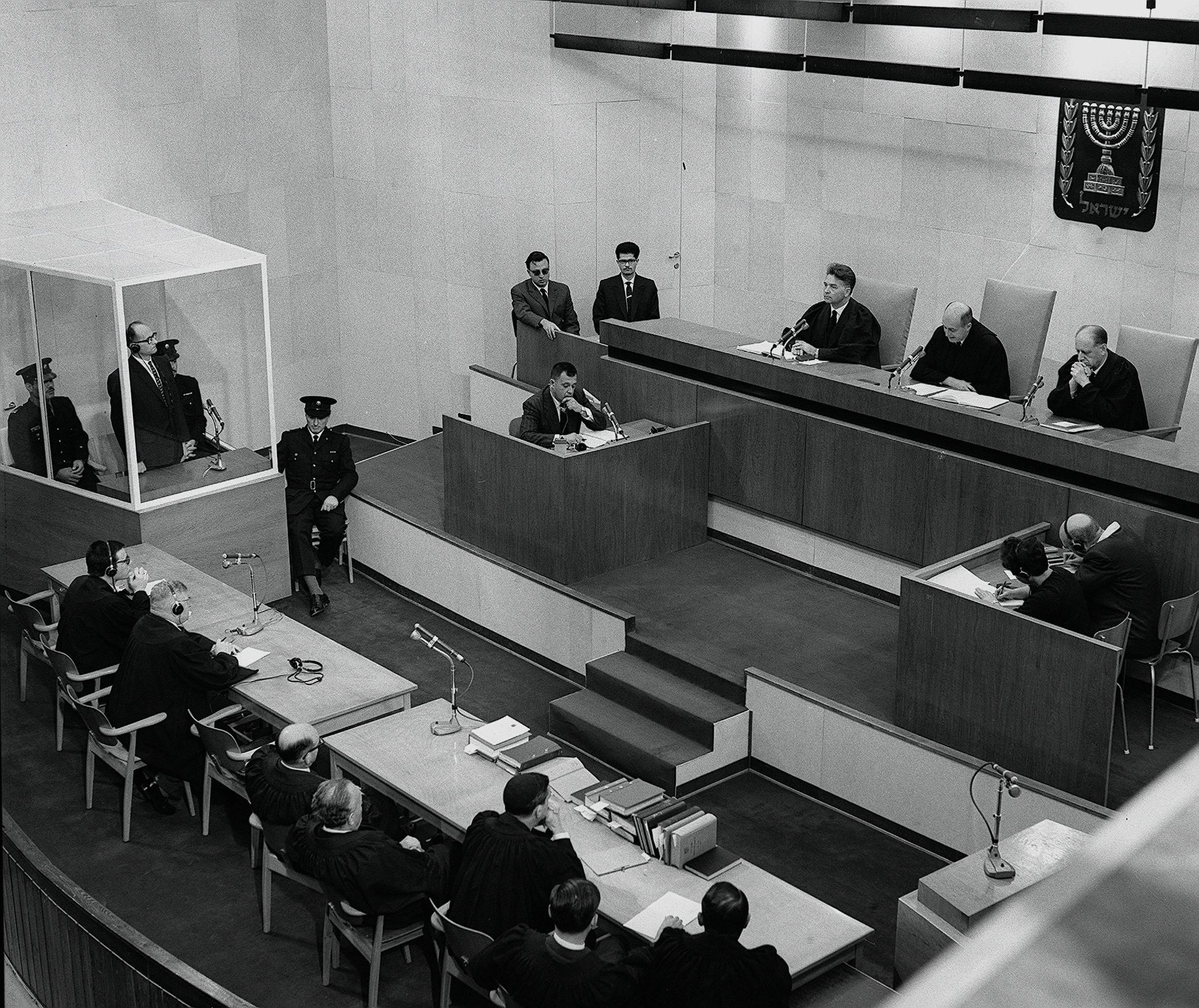
Adolf Eichmann's Jerusalem trial ran from April 11 to August 16, 1961.
Eichmann lived in Argentina as Ricardo Klement until the Mossad abducted him in 1960.
He was convicted on all 15 charges and hanged on the night of May 31 to June 1, 1962. His ashes were scattered at sea.
Survivor testimony, much of it heard for the first time, made empathy for the victims more central to Israeli culture.
Context
Adolf Eichmann's Jerusalem trial ran from April 11 to August 16, 1961. Eichmann lived in Argentina as Ricardo Klement until the Mossad abducted him in 1960.
§ 01Geography
Where it happened
§ 02Museum
Objects and images
§ 04Network
Connections
§ 05Bibliography
Further reading
Tom Segev, The Seventh Million: The Israelis and the Holocaust (New York: Owl Books, 1991).
Israelis and the Holocaust · recommended in Efron, Lehmann and Weitzman, p. 517
§ 06Apparatus
Sources on this page
- 01Efron, Lehmann and Weitzman, p. 468inspect
- 02Efron, Lehmann and Weitzman, p. 468inspect
- 03Efron, Lehmann and Weitzman, p. 468inspect
- 04Efron, Lehmann and Weitzman, p. 468inspect
- Documented evidenceAttested by contemporary evidence: texts, inscriptions, coins, papyri or archaeology.
- Scholarly reconstructionHistorians' inference from indirect evidence.
- Tradition or narrativeA literary, traditional or religious account; significant in itself, but not independently verified.
- Contested interpretationScholars explicitly disagree; see the positions in the debate.
- Illustrative reconstructionA hypothesis or visual scheme to guide reading; not a historical claim.